


As spring arrives, so do the blossoms and the pollen. We know that beautiful spring weather can bring a lot of extra stuff to our yards. This often means more debris finding its way into our gutters. For those with slate roofs, keeping gutters clear is especially important. We’ll look at how the right gutter guards can help manage this seasonal mess.
Key Takeaways
- Spring brings petals and pollen, which can quickly clog gutters, especially on homes with slate roofs.
- Choosing the right gutter guards means looking at materials that hold up well with slate and perform effectively against light spring debris.
- We should think about how durable the guards are and how well they will keep our gutters clear from the common spring fallout.
Protecting Your Gutters From Spring Debris
Spring is a beautiful time of year, with all the new growth and blossoms. But for our homes, it can also mean a lot of extra work, especially when it comes to our gutters. We often forget about them until something goes wrong, like a clog or overflow. This season, let’s get ahead of the game.
Understanding Springtime Gutter Challenges
As the weather warms up, trees and plants really get going. This means more than just pretty flowers; it means a lot of loose bits falling from above. Think about it: tiny buds, delicate petals, and clouds of pollen. These things might seem harmless, but they can quickly pile up. They get washed down by rain and collect in your gutters. If you have older trees nearby, you might also deal with small twigs and bits of bark. These small organic materials are the main culprits behind gutter clogs. They can create dams that stop water from flowing where it should, leading to water backing up against your roofline or foundation.
We’ve seen firsthand how a seemingly small amount of fallen blossom can turn into a dense mat, trapping moisture and debris. This can lead to rust or rot over time, which is something nobody wants to deal with.
How Gutter Guards Help Manage Petals and Pollen
This is where gutter guards come into play. They act as a barrier, letting water flow into your downspouts while keeping the larger debris out. For spring, we’re particularly interested in how they handle petals and pollen. Different types of guards work in various ways:
- Mesh Guards: These have small holes that allow water through but block most leaves, petals, and larger pollen clumps. They’re generally affordable and easy to install.
- Screen Guards: Similar to mesh, but often with larger openings. They’re good for keeping out leaves and twigs but might let smaller pollen through.
- Surface Tension Guards: These are designed to let water flow over the edge and into the gutter, while debris slides off the top. They rely on water’s natural tendency to flow downwards.
Choosing the right guard means looking at the specific types of debris you get most often. If it’s mostly large petals and leaves, a simple mesh might be enough. If you’re dealing with finer pollen and smaller bits, you might need something with a tighter weave or a different design altogether.
Selecting The Right Gutter Guards For Your Slate Roof
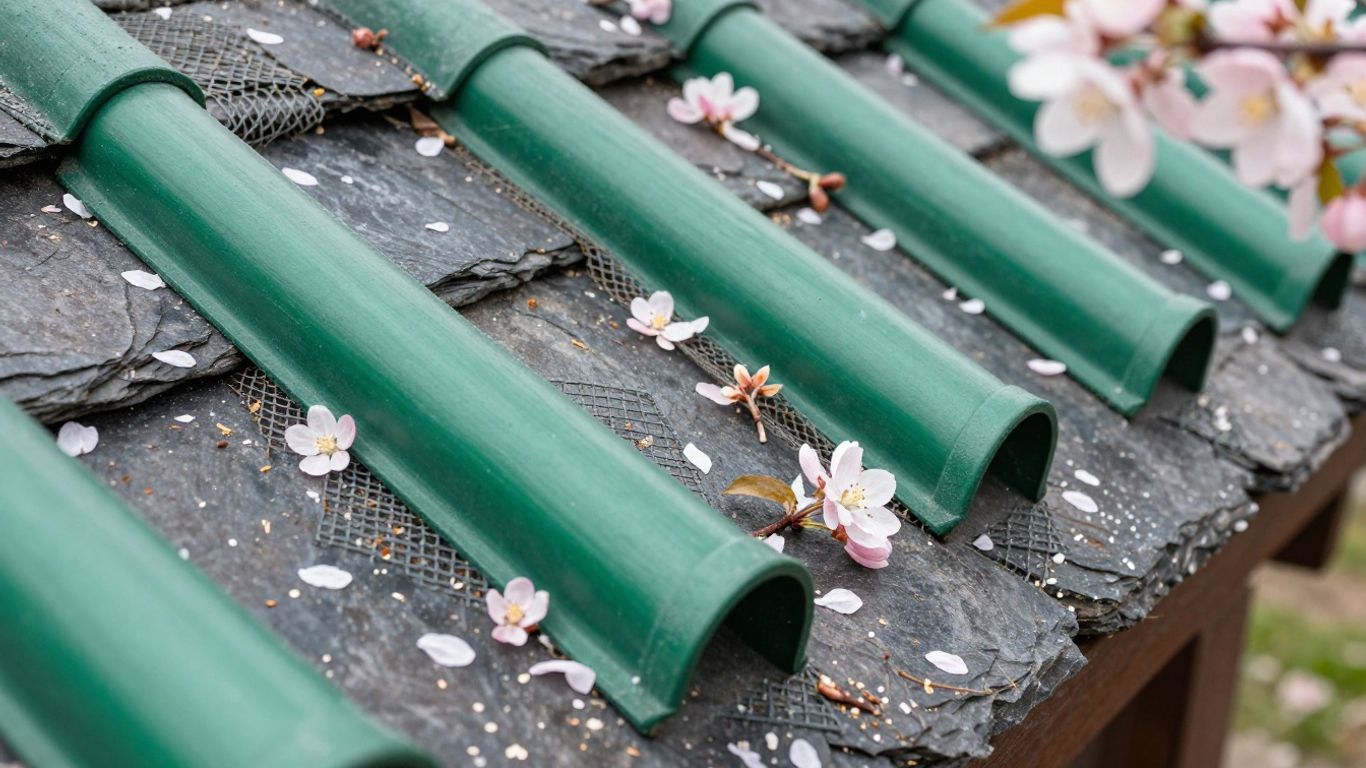
When we have a slate roof, picking the right gutter guards becomes a bit more specific. Slate is heavy and can be brittle, so we need guards that won’t put extra stress on the tiles or the gutters themselves. We’ve found that the best approach is to consider how the guard attaches and what materials it’s made from.
Considering Durability and Material for Slate Roofs
We’ve looked at a few different types of guards, and not all of them are a good fit for slate. Some guards require screws that go directly into the fascia or even the roof tiles, which is a big no-no for us with slate. We want guards that either slide under the first row of shingles or attach to the front lip of the gutter. This way, we avoid drilling into the slate.
Here are some materials we tend to favor:
- Aluminum: It’s light, strong, and doesn’t rust easily. It’s a good all-around choice.
- Stainless Steel: This is even more durable than aluminum and holds up well against the elements. It’s a bit heavier, but still manageable.
- High-Quality Vinyl: While some vinyl can become brittle over time, the better grades can be quite resilient and are very lightweight, which is a plus.
We generally steer clear of guards that are too heavy or require complex installation that might disturb the slate.
Evaluating Performance of Slate Roof Gutter Guards
Performance isn’t just about catching leaves; it’s also about how well the guard works with the specific challenges of a slate roof. We need guards that can handle the weight of wet leaves and debris without bending or breaking. Also, the angle of the guard matters. A good angle helps water flow freely into the gutter and prevents water from pooling on top, which could freeze and cause damage in colder months.
We’ve found that guards with a fine mesh or small perforations tend to do a better job of keeping out smaller debris like pollen and tiny seed husks, which are common in spring. However, we also need to make sure these fine openings don’t clog too easily from larger items like petals.
Here’s a quick rundown of what we look for:
- Debris Filtration: Can it handle leaves, petals, and pollen without getting blocked?
- Water Flow: Does water get into the gutter easily, even during heavy rain?
- Durability: Will it last for years without cracking, bending, or rusting?
- Ease of Maintenance: How simple is it to clean off any debris that does accumulate on top?
When choosing guards for a slate roof, our main goal is to protect both the gutters and the roof itself. We prioritize guards that are easy to install without disturbing the slate tiles and that are made from materials that can withstand the weather without adding unnecessary weight.
Ultimately, the best guard for our slate roof is one that balances effective debris management with a gentle installation method and long-lasting construction.
Wrapping Up Our Gutter Guard Chat
So, we’ve talked a lot about gutter guards and how they can help with all the stuff that falls from trees in the spring. It’s not the most exciting topic, we know, but it really does make a difference. Keeping those gutters clear means less work for us later and helps protect our homes. We hope this gave you some good ideas on what to look for. Picking the right guards might take a little time, but it’s worth it to avoid those messy clogs when the seeds and blossoms are flying. Happy home maintaining!
Frequently Asked Questions
Why do we need gutter guards when spring arrives?
Spring brings a lot of natural stuff that can clog our gutters. Think about all the seeds falling from trees, the tiny bits of pollen floating around, and even flower petals from blooming plants. If we don’t protect our gutters, these things can pile up, blocking water from flowing away. This can cause water to back up and damage our homes, which is something we definitely want to avoid.
Are there special gutter guards for roofs made of slate?
Yes, we should consider the type of roof we have. Slate roofs are quite heavy and can be a bit delicate. When choosing gutter guards for a slate roof, we need guards that are strong enough to last a long time but also gentle enough not to harm the slate tiles. We’ll look for materials that won’t rust or break easily, ensuring they work well with our specific roof type.
How do gutter guards actually stop petals and pollen from getting in?
Gutter guards act like a filter for our gutters. Most have small holes or slits that let water pass through easily into the downspout, but they are too small for bigger things like petals, seeds, and pollen to get through. This way, the gunk stays on top of the guard, and we can clean it off later without the mess being deep inside the gutters themselves. It keeps the water flowing freely.

