


When strong winds hit, our roofs can take a beating. We might find ourselves dealing with missing shingles or even larger holes. It’s a stressful situation, and figuring out what to do next is important. We need to make sure our homes are protected from further damage, especially if rain or more wind is on the way. Sometimes, a quick fix is all we can manage right away.
Key Takeaways
- After wind damage, we must first check the roof safely to see what needs fixing. If the damage looks bad or we aren’t sure, calling for help is the next step.
- For small problems, we might be able to put up a tarp ourselves to keep water out. It’s a way to buy time until a proper repair can be done.
- When the damage is more serious, or we can’t do it ourselves, getting emergency roof tarping services is the best way to protect our homes quickly and properly.
Immediate Steps For Wind Damaged Roofs
When the wind howls and your roof takes a beating, it’s natural to feel a bit overwhelmed. The first thing we need to do is assess the situation, but we must do it safely. Don’t just run outside the moment the storm passes; wait until it’s truly over and the weather is calm.
Assessing The Damage Safely
Safety is the absolute top priority here. We can’t afford to put ourselves in more danger after the wind has already caused damage. Here’s how we should approach it:
- Stay Inside During the Storm: This might seem obvious, but it bears repeating. High winds can send debris flying, and your roof could be actively failing. It’s not the time for a roof inspection.
- Wait for Calm Conditions: Once the wind dies down and the rain stops, we can start to think about looking. Make sure the ground around your house is stable, especially if it’s wet or muddy.
- Visual Inspection from the Ground: The safest way to start is by looking at your roof from the ground. Use binoculars if you have them. Look for missing shingles, lifted sections, or any obvious holes. Also, check your gutters and downspouts; they can tell you a lot about what’s happened up top.
- Interior Check: Go inside and check your attic or the highest level of your home. Look for any signs of water stains on the ceiling or walls, or any drips. This is a clear indicator that the roof has been compromised.
Remember, if you see any downed power lines near your home, stay far away and call your utility company immediately. Electrical hazards are incredibly dangerous.
When To Call Emergency Roof Tarping Services
Sometimes, the damage is more than we can handle ourselves, or it’s just too risky to attempt a temporary fix. Knowing when to call in the professionals is key to preventing further damage and keeping our homes safe.
We should seriously consider calling for emergency roof tarping if:
- We see large sections of the roof missing or significantly damaged.
- There are visible holes or breaches in the roof deck.
- Water is actively dripping into our home, especially in multiple areas.
- We are uncomfortable or unsure about assessing the damage or attempting any repairs ourselves.
- The damage is extensive, and a temporary fix is needed quickly to prevent more water intrusion before a permanent repair can be scheduled.
Calling a professional service means they have the right equipment and experience to secure your roof safely and effectively. They understand how to properly attach tarps to prevent them from blowing off again and causing more problems. It’s about protecting your home’s structure and your belongings from further harm.
Securing Your Home With Temporary Roof Solutions
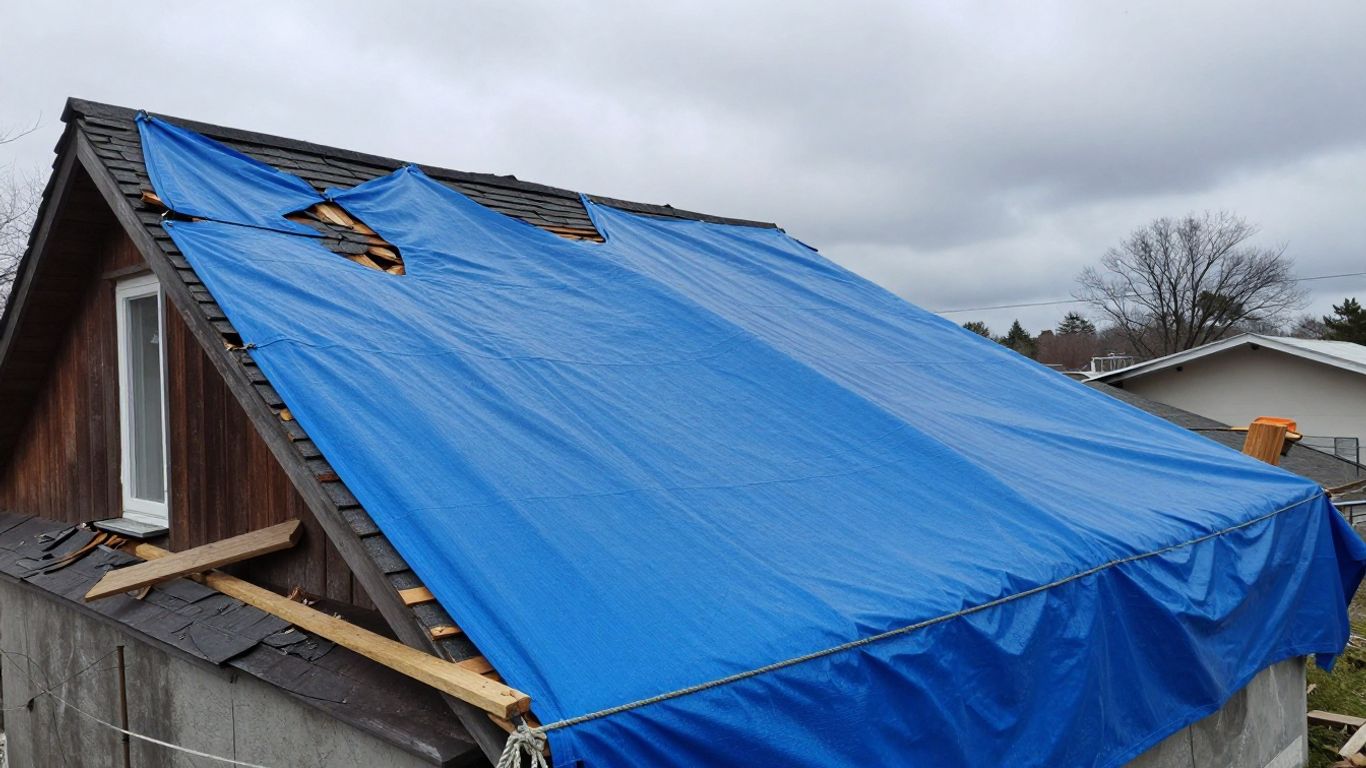
When wind damage strikes, our first thought is always about safety. But once we’ve assessed the situation and know it’s safe to proceed, we need to think about protecting our homes from further harm. Water and weather can do a lot more damage, even after the wind dies down. That’s where temporary roof solutions come in. We’re talking about ways to cover up those holes and tears until a permanent repair can be made.
DIY Tarping Techniques For Minor Damage
For smaller issues, like a few missing shingles or a small hole, we might be able to handle some basic tarping ourselves. It’s not a permanent fix, mind you, but it can stop the rain from getting in right away. The goal here is to create a barrier that sheds water away from the damaged area. We need to be careful, though. Working on a roof, even a damaged one, can be risky. If we’re not comfortable or if the damage looks significant, it’s always better to call in the pros.
Here are some general steps we might take for DIY tarping:
- Gather Supplies: We’ll need a heavy-duty tarp (larger than the damaged area), lumber (like 2x4s), screws or nails, a hammer or drill, a utility knife, and safety gear (gloves, sturdy shoes, and maybe a harness if it’s steep).
- Prepare the Area: Clear any loose debris around the damage. If there are jagged edges, we might need to trim them carefully with the utility knife.
- Secure the Tarp: Drape the tarp over the damaged section, making sure it extends well beyond the edges. We want to create a slope so water runs off. Then, we’ll use the lumber to create a frame around the tarp’s edges, securing it to the roof decking with screws or nails. This helps keep the tarp taut and prevents wind from getting underneath it.
- Check for Water Flow: Make sure the tarp is angled correctly to direct water away from the house, not pooling on top or running into the attic.
Remember, this is a temporary measure. The wind can be unpredictable, and a poorly secured tarp can become a hazard itself. We should inspect it regularly, especially after strong gusts.
Professional Emergency Roof Tarping Services Explained
Sometimes, the damage is just too much for us to handle safely or effectively. That’s when we call in the experts. Emergency roof tarping services are companies that specialize in these kinds of quick, temporary fixes. They have the right equipment, the experience, and the safety training to get the job done right, even in tough conditions.
What can we expect when we call them?
- Rapid Response: These services understand the urgency. They aim to get to your home quickly, often within hours of your call, to prevent further water damage.
- Professional Assessment: They’ll do a thorough inspection of the damage to determine the best way to tarp it. They know how to work around different roof types and materials.
- Secure and Durable Tarping: They use industrial-grade tarps and specialized methods to ensure the tarp stays in place, even in high winds. They’ll create a proper slope and secure the edges effectively.
- Documentation: Many services will also document the damage and the temporary fix, which can be helpful for insurance claims.
While it costs money to hire professionals, the peace of mind and the protection they offer against further, more expensive damage are often well worth the investment. It’s about getting our homes secured quickly and correctly so we can focus on the permanent repairs later.
Wrapping Up: Your Next Steps
So, we’ve gone over how to get that tarp up and make some quick fixes after the wind has had its way with your roof. It’s not the prettiest job, but getting it done can stop more damage from happening. Remember, these are temporary solutions. We really need to get a professional out to look at everything properly as soon as we can. They’ll know what to check for and how to make sure your home is safe and sound for the long haul. Don’t put off that permanent repair; it’s worth the peace of mind.
Frequently Asked Questions
What should we do right after strong winds damage our roof?
Our first priority is to make sure everyone is safe. We should stay away from any areas that look unstable. If we can see obvious holes or missing parts of the roof, we need to check if water is getting inside. For minor issues, we might be able to handle it ourselves, but if the damage looks bad, calling for professional help is the smartest move.
How do we know if we need professional roof tarping?
If the wind has ripped off a large section of your roof, or if there are many missing shingles that let water in, it’s time to call the pros. We should also consider professional help if we’re not comfortable climbing on the roof or if the damage is extensive. They have the right gear and know-how to do it safely and effectively.
Can we really put a tarp on our roof ourselves?
For very small problems, like a few loose shingles or a tiny hole, we might be able to put up a tarp ourselves to stop immediate leaks. However, this can be risky, and it’s usually just a short-term fix. If the damage is more than minor, it’s much safer and better to let experienced roofers handle the tarping.

